

Calls for investigation into owner of Stanlow refinery after loans from ‘Putin’s piggy bank’ relocated to Mauritius
In March 2022, days after the first wave of Russian tanks surged over the border with Ukraine, dockers at Ellesmere Port in Cheshire took a stand.
Appalled by Vladimir Putin’s brutality, they vowed not to unload any Russian oil destined for the nearby Stanlow refinery, the major hub for tankers delivering fuel supplies into the North West of England.
As the spotlight fell on Essar, the Indian conglomerate that owns Stanlow, the company moved fast to head off the outcry, ceasing all imports of Russian fuel.
But analysis of the Essar group’s company accounts raises questions about whether the flow of money stopped as swiftly as the flow of oil.
In the months following the invasion, Essar put in place a series of offshore arrangements that appears to have enabled the group to continue dealing with a Russian bank that was sanctioned by the West.
Essar shifted billions of dollars in loans provided by the Kremlin-controlled lender VTB to a subsidiary in the offshore tax haven of Mauritius, where sanctions did not apply.
While there is no suggestion that Essar acted illegally, the “unusual” restructuring “raises red flags in relation to potential sanctions circumvention”, said Michael Ruck, a partner at the law firm K&L Gates.
Authorities in Cyprus, whose government approved the transfer of loans to Mauritius, are examining whether Essar’s transactions with VTB following the move “constitute a violation of EU sanctions regulations”, a spokeswoman for the country’s finance ministry told SourceMaterial.
The Cyprus and Mauritius companies were subsidiaries of Essar’s UK arm, Essar Energy, which has received £10 million in government “decarbonisation” grants. Now, say British politicians and experts, UK authorities should follow Cyprus by launching their own investigation.
“VTB is not just another bank. It is an arm of the Russian state helping finance a war of aggression against Ukraine”, said Liam Byrne MP, who chairs the parliamentary committee responsible for sanctions and economic security. “That is why it is sanctioned. And that is why any UK business should not go anywhere near it, directly or indirectly. The next steps for government are very simple. Investigate. Now.”
Essar denies any wrongdoing and said it has no knowledge of the Cypriot probe. It took “responsible and proactive steps, on the basis of expert legal advice, to ensure full compliance” with sanctions, lawyers for the company said.
Arrangements surrounding the loan transfers were “expressly approved by the Cypriot authorities” following advice from a leading law firm and any suggestions of “red flags” or circumvention were “without foundation”, they said.
A special relationship
Even as much of the world turned its back on Russia following its 2022 assault on Ukraine, India maintained cordial ties.
Nowhere was this more evident than in July 2024, when Vladimir Putin presented India’s Prime Minister, Narendra Modi, with the Order of St Andrew The Apostle, Russia’s highest honour, during a visit to Moscow.
The relationship was built on energy deals that have helped India quench its fast-growing population’s thirst for oil and gas—with Essar playing a leading role. In 2017 a consortium led by Russia’s state-owned oil company Rosneft paid $13 billion for Essar’s Indian refineries in a blockbuster sale personally brokered by Modi and Putin.
“VTB is not just another bank. It is an arm of the Russian state”
In the years that followed, Essar’s dependence on Russia would continue.
Founded by the Indian Ruia brothers Shashi (who died in 2024) and Ravi, Essar takes its name from their initials.
In 2010, seeking greater access to global investors, the group had listed Essar Energy on the London Stock Exchange. A year later, it bought Stanlow, the Cheshire refinery that fuels one in six British vehicles and nine airports, for $1.3 billion.
It was in 2014, the year Vladimir Putin’s forces seized Crimea from Ukraine, that the Essar group received a major cash injection from Russia, borrowing $1 billion from state-owned lender VTB.
VTB’s chief, Andrei Kostin, is widely known as “Putin’s banker”. He chairs the state builder of Russia’s warships and the bank is reportedly an active participant in Russia’s war effort, its charitable arm directly funding a frontline unit in Crimea.
Deals including the Rosneft sale would make the Ruia brothers billionaires, with luxury homes in Mumbai, Delhi and London, and a 280-foot superyacht, Sunrays. A lavish family celebration reportedly featured Sir Richard Branson, the Gipsy Kings, and a flown-in musical fountain.
But three years on from the Rosneft sale, parts of the Ruias’ empire were struggling. Hit hard by the 2020 coronavirus pandemic, Stanlow began posting heavy losses and the UK business was in turmoil.
Three chief executives quit the company that ran the refinery, Essar Oil UK, in 15 months. Two City law firms also walked away, as did two auditors: one, Deloitte, quit over what it described as doubts about the “governance” of Essar’s loans. (Essar Oil UK later said it had adopted new governance principles.)
As Essar sought stability it tapped Russian credit lines again. By 2020, its debt to VTB stood at more than $2.5 billion. The loans were housed in two Cypriot companies, with UK-based Essar Energy as guarantor, according to Companies House filings.
Offshore workaround
Putin’s February 2022 attack on Ukraine changed everything. Russia became a pariah state and VTB and Kostin were targeted by international sanctions. Overnight, Essar’s loans transformed from a lifeline to a logistical and reputational headache.
Essar’s UK arm was just one of many British companies with Russian business interests to be blindsided by the conflict.
Typically, UK businesses that need to meet obligations to sanctioned companies seek a permit from the regulator, the Office of Financial Sanctions Implementation.
Shortly after sanctions came into force, Essar duly reported in its accounts that “payments to VTB loans can only be made after having obtained a special licence from the UK government”.
Yet Essar never went to OFSI. Instead, after its lawyers say it took “detailed advice from leading sanctions lawyers across all relevant jurisdictions”, the company asked the government in Cyprus to approve moving the loans from group subsidiaries on the island and into Mauritius, where Russian sanctions did not apply.
While the UK may license a company to keep dealing with a sanctioned entity as financial ties were untangled, it would be extremely unlikely to allow a company to continue dealing with Russia as before, or deepen ties, said Helen Taylor, an expert at the campaign group Spotlight on Corruption.
“OFSI may grant permission to UK companies to make good on existing obligations,” she said. “But when companies look to enter into new obligations with sanctioned entities, that’s a different question.”
Responding to questions, Essar’s lawyers said that there was “no basis” for reporting any matters to OFSI. The note in its accounts had reflected broader sanctions advice, not any expectation that it would require OFSI’s approval, they said, adding that UK sanctions law did not apply to the relevant transaction.
Essar has taken measures to “ringfence” its VTB loans and was making “every effort” to settle the debt by the end of the year, they said.
Loan enhancement
The island-hop to Mauritius appears to have done little to distance Essar from VTB, nicknamed “Putin’s piggy bank”. Essar may even have deepened its dependency on Russian loans following the Mauritius move, corporate filings suggest.
Following the move, Essar appears to have “enhanced” its VTB borrowing by $1.2 billion, according to accounts for its main UK subsidiary.
The group’s lawyers said that the “enhancement” reflected accrued interest rather than new borrowing, adding that any suggestion that Essar deepened ties with VTB was “false” and that the company was repaying the loans in a “sanctions-compliant manner”.
But two forensic accountants from leading UK firms who reviewed Essar’s latest accounts identified new ruble exposure equivalent to at least $1 billion that they believed could not be explained by accrued interest.
“Essar’s accounts as filed don’t make sense”
“Essar’s accounts as filed don’t make sense unless there was new borrowing from Russia,” said Rachel Sexton, an independent forensic accountant.
In the year following the move, Essar’s Cyprus subsidiary paid $39 million to the Mauritius company. After this partial payment, the Cypriot company still owed its Mauritian counterpart half a billion dollars as of March 2024.
Lawyers for Essar said that $39 million payment was made in accordance with an “intercompany liability” and that none of the funds were used by the Mauritius subsidiary for payments to VTB, directly or indirectly. There was “no breach of the permission granted by the Cypriot authorities,” they said.
A spokeswoman for the Cypriot government said: “The approval did not authorise any loan repayments to VTB, whether directly or indirectly, including via third-country jurisdictions such as Mauritius.” She added: “The approval was explicitly conditional upon no funds being made available, directly or indirectly, to VTB.”
Meanwhile, Essar was building a presence on the ground in Russia. In 2023 it set up a new company in Moscow with offices in the Moscow Federation Tower, a boat-shaped skyscraper that is also home to the headquarters of VTB Capital.
Essar’s lawyers said that the primary purpose of the Moscow subsidiary, owned via Hong Kong, was to manage the VTB loans as the group wound down its ties to Russia.
One Moscow employee does not appear to have understood this. In an online interview published in March 2024, he said that one of his duties was to “identify investment opportunities”.
In the UK, Essar appears to have been an attractive refuge for sanctions-hit VTB executives. After UK authorities shut down VTB Capital in London in early 2022, three former employees, including two executive directors, joined UK-based Essar Energy.
Evidence failure
Essar’s continuing relationship with VTB is now a worry for the government of Cyprus, which along with the rest of the EU has imposed sanctions on Russia.
When Cypriot officials agreed to let Essar transfer VTB’s loans to Mauritius, they demanded that the arrangement “would not create any new obligations”. They are now reviewing whether the transactions violated sanctions, a finance ministry spokeswoman said.
The group’s manoeuvres also appear to have caused disquiet in Mauritius.
As Essar transferred its Russian loans to the tax haven, the group in September 2022 asked authorities there to approve a restructuring to “delink” its Mauritian business from the UK.
It took three years for Mauritius to approve the changes.
Essar’s lawyers said that the “delinking” was part of a wider company reorganisation unrelated to any sanction issues. Asked about the delay, they blamed Mauritian authorities, citing administrative reasons beyond the company’s control.
But a Mauritian government spokeswoman said the holdup was caused by Essar’s failure to supply evidence about the nature of its ties to Russia.
Essar had not handed over key documents including evidence relating to “creation of security (loan by Russian bank)” and “purpose of loan”, and provided a shareholder structure that “doesn’t match with names of shareholders as per letter of incumbency”, the spokeswoman said.
Essar’s continued relationship with a Kremlin-controlled bank is “very alarming”, said Lloyd Hatton MP, a member of the all-party anti-corruption group.
“We need to get to the bottom of this urgently,” he said. “The authorities must now investigate Essar and their potential dealings with this Russian bank.”
Essar’s ownership of strategic UK assets should be studied “forensically” by the British government, said Oliver Windridge at International Lawyers Project, a legal support not-for-profit group.
“The concern is that history does repeat itself, ultimately to the detriment of Ukrainian people who are relying on the UK to play a key role in preventing the financing of Putin’s war machine,” he said.
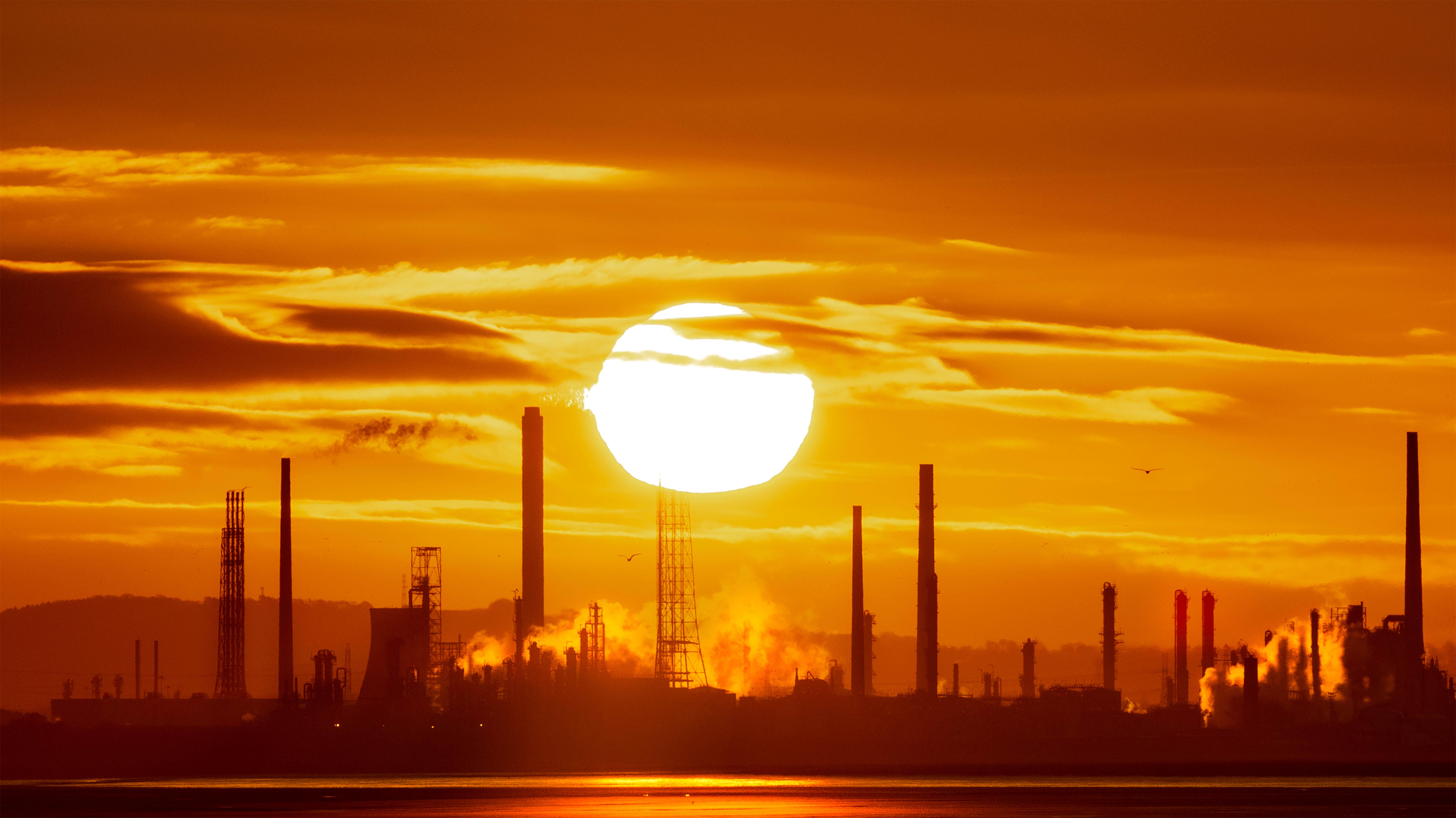
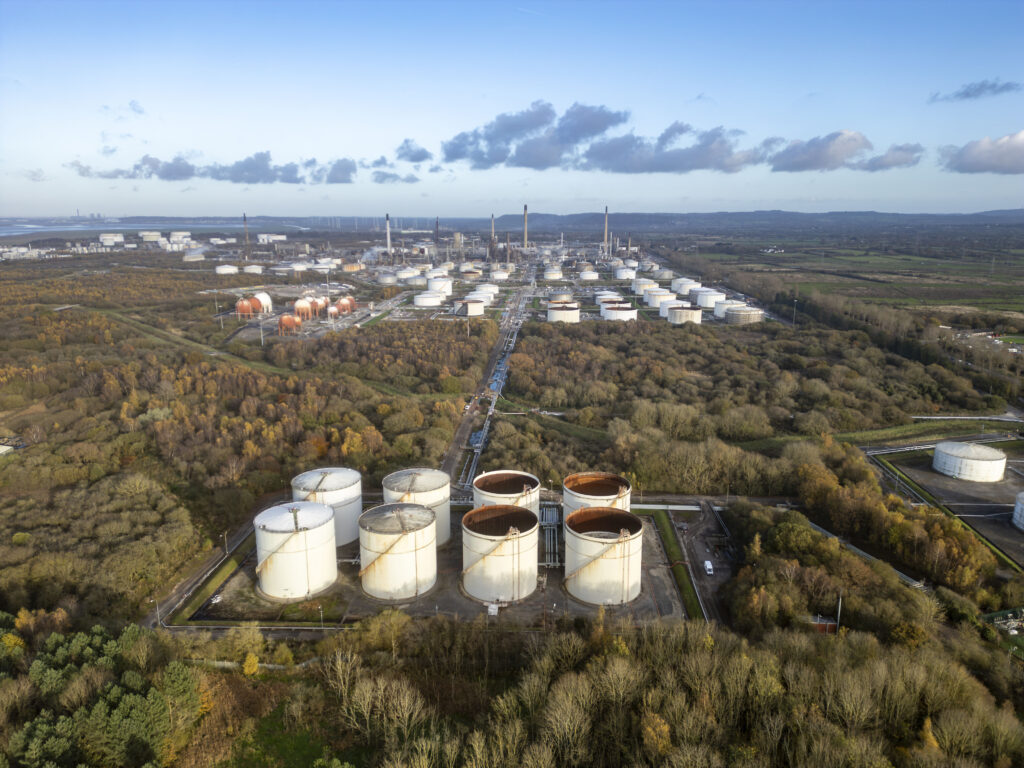
Headline picture: The Stanlow refinery at sunrise (fstopphotography/iStock)