

Timber industry’s influence risks derailing global carbon calculations, scientists warn
Amid fierce debate about how to slow global warming, almost everyone agrees about one thing that works: planting trees.
Done right, tree-planting is the most cost-effective way of removing carbon from the atmosphere, a study by the University of Exeter found. In the UK, the government pays farmers up to £22,900 a hectare to plant new woodland.
The exception to the scientific consensus is a group of lobbyists for companies including IKEA, the furniture maker whose products have been linked to the destruction of some of Europe’s most ancient woodland, and Weyerhaeuser, a multibillion-dollar US timber company.
Documents obtained by SourceMaterial reveal how the lobbyists persuaded a global emissions watchdog to endorse deeply controversial proposals that allow companies to claim they are fighting climate change by chopping trees down. Two scientists at the watchdog have resigned over these events.
“It’s nonsense,” said Charles Canham, another of the watchdog’s scientists and a forest ecologist at the Cary Institute of Ecosystem Studies. Canham described his first time seeing the industry proposal as “an ‘oh shit’ moment”.
‘The more wood the better’
Deforestation is one of the biggest drivers of global warming, accounting for around 11 per cent of greenhouse gas emissions—roughly the same as all the world’s cars, motorcycles, trucks and buses put together, according to the United Nations.
As part of efforts to cut pollution, Greenhouse Gas Protocol, a non-profit initiative, has developed a set of rules for companies to report climate-related emissions.
Funded by donors including Apple, Google, Microsoft and Meta, GHG Protocol has become the world’s most widely used carbon accounting framework. It’s the basis for mandatory disclosure rules in the European Union and Australia and 73 per cent of the S&P 500 grouping of the largest companies in the US have signed up voluntarily.
For the past six years GHG Protocol has been designing a new way to record how greenhouse gases are emitted and removed from the air through land use. This work has been directly funded by IKEA and Weyerhaeuser, among others.
Internal documents from 2025 and 2026 seen by SourceMaterial show how the work descended into a pitched battle between experts and lobbyists. GHG Protocol’s working group was split between representatives from IKEA, Weyerhaeuser and other companies on one side and scientists on the other, eventually leading two of the initiative’s scientists to resign.
GHG Protocol is currently considering the two groups’ competing methodologies.
At the heart of the dispute are lobbyists’ proposals for a change to carbon accounting rules that would allow them to claim that every tree they chop down actually has a positive impact on the climate.
“It distorts and warps the landscape of what we would understand to be sustainable”
While the scientists’ proposal would measure the impact of chopping down trees compared to not chopping them down, the lobbyists’ proposals would require companies to report only the overall change in the forest where the wood is from.
Although in total the world is losing trees every year, this is mostly happening in tropical rainforests. The majority of forests worldwide are actually growing, partly because extra carbon dioxide in the atmosphere boosts tree growth.
The industry proposal would allow companies to claim credit for this, even though it is unrelated to the felling of trees, which generally releases carbon.
Under the methodology, “harvesting and using wood for any purpose becomes carbon negative, and the more wood used the better,” wrote scientists on the GHG Protocol working group, criticising the proposal.
Jennifer Skene, global forest policy director at the Natural Resources Defense Council, who also sits on the working group, called the methodology “bizarre” and “nonsensical”, saying implementing it would be “distorting and warping the landscape of what we would understand to be sustainable”.
Applied in a pilot study, the new rules immediately yielded eyebrow-raising results. Companies including paper and furniture makers that tended previously to aim modestly for ‘climate neutrality’ were now recording huge net removals of carbon from the atmosphere.
One US paper company, anonymised in the study, found that its use of wood not only emitted no greenhouse gases but actually removed 45 million tonnes of carbon—equivalent to the annual emissions from 12 coal power stations, or more than the whole of Sweden.
“If the removal happened on the land that you’re managing, that’s a valid thing to count in your inventory,” argued Annette Cowie, a scientist working for the New South Wales government who supports the proposal.
“This is no different than how an agricultural company would report the emissions from the farms it sources food from, or how a real estate company would report emissions from its portfolio of buildings,” said Vaughan Andrews, senior programme manager for sustainability at Weyerhaeuser.
A spokesman for IKEA said the company “does not believe that forest harvesting in itself should be considered a climate benefit” and that “climate outcomes depend on how forests are managed over time”.
He said their methodology “is supported by several scientists, NGOs and technical experts” and builds on work by the UN.
Secret letters
GHG Protocol scientists never intended to let timber companies claim felling as climate-positive.
But in April last year, Nathan Truitt, executive vice president at the American Forest Foundation—a woodland owners’ organisation aligned with the other lobbyists—wrote to GHG Protocol leaders to allege that its scientific advisers were biased and unaware of all the relevant research.
To illustrate his point, Truitt, who is not a scientist, listed a series of papers published by scientists outside the group, suggesting that their authors should also be represented on the GHG Protocol panel.
Soon after, Alexander Bassen, chair of the GHG Protocol standards board, wrote secretly to four scientists cited by Truitt to ask their opinion. Two backed the lobby’s proposal, while two took the opposite view despite Truitt’s endorsement.
“The process was not objective or fair”
Other members of the group criticised Bassen for consulting scientists Truitt had specifically requested. But the apparent division of scientific opinion provided justification for GHG Protocol to push ahead with a consultation on the new methodology, which may now be adopted as the global standard.
“The process was not objective or fair,” and was “weighted” towards industry, said Canham, one of the original scientists on the group.
In an interview with SourceMaterial, Truitt said he stood by his complaint but it was “deeply unfortunate” that it was kept secret and he would have preferred to have had the debate in public.
He said he had not intended to question anyone’s objectivity or integrity but that scientists involved in the process were not “engaged in a good faith effort to find a workable compromise solution”, alleging that some of them failed to turn up to meetings.
“It was a complaint to GHG Protocol about who they had excluded from the process, not a complaint about who they did include,” said Truitt.
The tree-cutting methodology has sparked a wave of protest.
In 2024 the European Academies Science Advisory Council, the body that advises the EU, wrote to GHG Protocol to object, as did a group of 215 scientists who warned that the industry-backed plans “threaten the world’s forests”.
Five GHG Protocol scientists on the working group co-authored a memo pointing out potentially bizarre outcomes of the timber companies’ preferred accounting system.
Recycled paper would now be considered less sustainable than paper from newly harvested trees, they said, while companies that use wood less efficiently would be considered better for the climate because they cut down more trees.
“To use a humorous example,” they wrote, “buying wood for a bonfire at company parties would make a company more carbon negative.”
Andrews from Weyerhaeuser told SourceMaterial these concerns were based on “a misunderstanding about the purpose of a GHG inventory, which cannot enable a claim that the use of a product is carbon negative”.
Cowie of the New South Wales government signed a letter from 44 scientists supporting the industry proposal. She said their letter had fewer signatures because they “didn’t choose to make a song and dance about it and put it out in the media”.
‘Scientifically invalid’
Last month, Tim Searchinger resigned his role as director for forests at the World Resources Institute, the company that oversees GHG Protocol, in protest.
The Princeton University environmental scientist, who was also one of the first to object to the timber industry’s proposal, told SourceMaterial that “developments with the Protocol” had undermined scientific integrity “in both substance and process, with large potential consequences” and that he had found himself “unable to correct them”.
A GHG Protocol spokesperson said: “Forest carbon accounting remains an open topic under consideration” and stressed that “no approach has been selected”.
They said that the organisation “remains committed to an open, transparent and evidence-based standard development process”.
Danny Cullenward, a senior fellow at the University of Pennsylvania, also quit his position on the GHG Protocol’s standards board over the episode.
In his resignation letter he called the plan “scientifically invalid” and “strenuously” objected to the GHG Protocol’s “treatment of scientific information—and scientists”.
I have resigned from the Greenhouse Gas Protocol's Independent Standards Board. The Protocol is openly violating its own rules and has effectively delegated forest carbon accounting standards to a secret, industry-led working group. ghgpolicy.org/s/2026-06-08…
— Danny Cullenward (@ghgpolicy.org) June 8, 2026 at 7:04 PM
[image or embed]
As an example, he complained that a GHG Protocol collaboration with the International Organisation for Standardisation (ISO) was kept secret from the board he sat on.
“Protocol staff initially told the board that the board would make all substantive decisions about forest carbon accounting rules, but later acknowledged that the ISO had already approved an industry-written method” that GHG Protocol is now considering adopting itself, Cullenward told SourceMaterial.
The ISO method, seen by SourceMaterial, closely aligns with the proposal endorsed by IKEA and Weyerhaeuser.
ISO’s involvement signals that forest carbon issues are being “delegated to a secret, industry-dominated drafting process”, according to Cullenward.
“I will not be intimidated or silenced about what is happening,” he wrote. “Nor will I take any further part in it.”
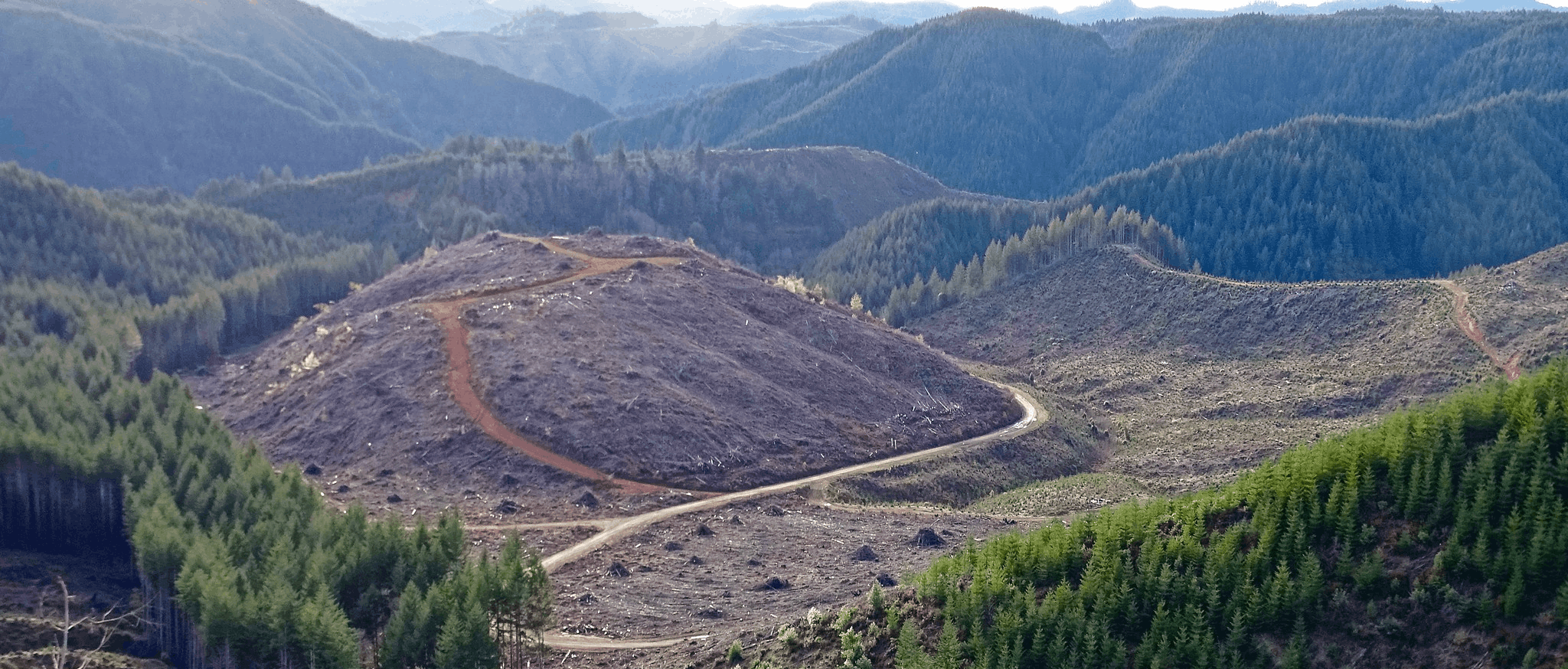
Headline picture: A Weyerhaeuser tree farm in Oregon (Francis Eatherington)