


Bacteria that can cause diarrhoea and sometimes death detected at levels exceeding federal food safety limits
Inspectors found salmonella bacteria in more than a third of ground and chopped turkey samples at slaughterhouses owned by Butterball, America’s biggest turkey company, data shows.
The US Department of Agriculture’s (USDA) Food Safety and Inspection Service (FSIS) and some states conduct routine checks for salmonella and other bacteria in commercial poultry plants. Salmonella can live in the intestines of poultry, and it can cause nausea, diarrhoea and even death in humans if meat is not cooked properly and then consumed.
SourceMaterial analysed FSIS inspection data for fiscal years 2025 and 2026, provided by Slingshot Investigates, the investigative arm of animal rights group Project Slingshot. The analysis found that ground and chopped turkey salmonella rates from all Butterball’s slaughterhouses were well above the industry average.
Just under 43 per cent of ground and chopped turkey sampled over the past year at four Butterball plants contained the pathogen. No contamination was identified in Butterball’s whole birds or ready-to-eat (cooked) products. But at its North Carolina factory in Mount Olive—the nation’s biggest turkey slaughterhouse—FSIS inspectors found salmonella in 16 of 44 ground and chopped turkey samples tested, or 36 per cent. That’s well above the 13.5 per cent USDA limit for salmonella contamination in individual turkey-producing plants.
A slaughterhouse does not face any fine if it exceeds this limit nor does it have to recall products but the USDA does require it to explain how it is addressing the issue.
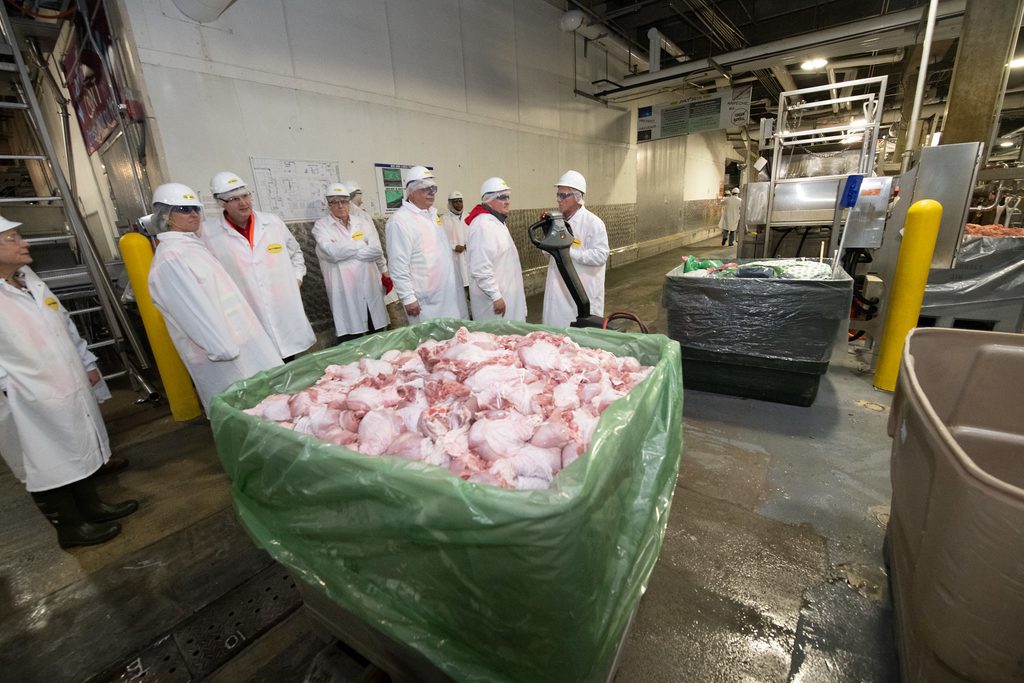
The high prevalence of salmonella is concerning because the Mount Olive plant processes some 285,000 birds a week and sells raw ground turkey, burgers and sausages nationwide. The company supplies the three biggest US supermarkets: Walmart, Costco and Kroger as well as fast food companies.
A Butterball spokesperson said in response to the contamination data: “At Butterball, food safety is critically important, and we work diligently to ensure consumers can feel confident in the products they prepare and serve to family and friends. We continue to invest in new technologies, strengthen our processes, and work with food safety experts to advance our practices and reduce pathogens, including salmonella.”
They also said the company was taking part in a pilot programme with FSIS “evaluating the cause of foodborne illness” and pointed out that none of the company’s pre-cooked products contained salmonella.
Alice Johnson, senior vice president of food safety, quality and animal care at Butterball, said the company believes FSIS should measure the quantity of salmonella in samples, not simply whether or not it is present, although experts interviewed by SourceMaterial disagreed.
“Yes, having less harmful salmonella contamination is better than having more of it,” said Sarah Sorscher, director of regulatory affairs at the Center for Science in the Public Interest. “You know what is even better still? Having no salmonella in your food. That’s sadly not where we are right now.”
At Butterball’s main rival, Jennie-O, 7 per cent of ground and chopped turkey samples tested positive for pathogens in the last year. A spokesperson for Jennie-O said that the company’s food safety programme is “robust” and noted that its results “compare favourably to industry averages and remain well below applicable regulatory performance standards”.
Sorscher explained that ground and chopped turkey might be prone to higher contamination because “every processing step is another opportunity for the meat to become contaminated”.
Mounting resistance
Tests also found evidence of drug-resistant superbugs. Two thirds of samples taken from birds’ intestines across all Butterball’s slaughterhouses in the fiscal year 2026 that contained salmonella and campylobacter (another pathogen that can sicken humans) showed strains resistant to at least one antibiotic. Doctors often use antibiotics to treat severe cases of both infections.
Butterball’s Johnson pointed out that the drug resistance tests use samples from whole birds and so do not necessarily show contamination in products that end up on shelves.
The government data covered the entire US meat industry, showing an average 12 per cent of samples contaminated with any pathogen and 33 per cent of pathogens resistant to drugs.
“I don’t see how we can call our food system the safest in the world when we don’t have standards to prevent people from getting sick from eating the poultry,” said Sorscher.
Thomas Gremillion, director of food policy at the Consumer Federation of America, said salmonella contamination is worsened by fast line speeds at slaughterhouses. The Trump administration has allowed poultry processors to boost line speeds to kill more animals per minute.
Faster speeds make it harder “to keep the animal viscera and what’s in the digestive tract from getting on the meat”, he said. “Beyond just being disgusting, it’s a food safety risk because that’s where the pathogenic bacteria concentrate.”
And, said Dani Replogle, an attorney at the non-profit Food & Water Watch, faster production means “more antibiotics in food and water”, which is at odds with President Trump’s promise to get chemicals out of our food. He has yet to move to reduce antibiotic use in the food supply.
Each year, about 25,500 Americans are hospitalised after being exposed to salmonella and campylobacter, leading to 435 deaths, according to the Centers for Disease Control and Prevention. In 2019, Butterball recalled almost 80,000 pounds of turkey products from Mount Olive after an outbreak of illness across two states likely caused by salmonella linked to the company’s products.
‘Very scary’
The number of samples detecting antibiotic-resistant bacteria were comparable at Butterball and Jennie-O. At Butterball’s slaughterhouses, 65 per cent of positive samples were resistant to at least one antibiotic drug, compared with 61 per cent at Jennie-O.
Other major suppliers also recorded similar levels of contamination. California-based Foster Farms registered a contamination rate of 29 per cent, with 55 per cent of pathogens resistant. Koch Foods, in Illinois, had a contamination rate of 27 per cent, with 41 per cent resistance. Neither Foster Farms nor Koch Foods responded to requests for comment.
Steve Roach, programme director at Food Animal Concerns Trust and senior analyst for the Keep Antibiotics Working coalition, said: “Antibiotic resistance doesn’t spontaneously generate in wildlife. It’s a result of antibiotic use on farms.” He noted resistance in salmonella is associated with longer disease duration, with “more likelihood of hospitalisation, and also more likelihood of death.”
Meat companies commonly feed antibiotics to all animals, not just sick ones, government figures show. In 2024, pharmaceutical companies sold 16 per cent more drugs to the animal agriculture industry than in the previous year, according to data from the US Food and Drug Administration.
“The superbugs are not a contamination problem; they are a factory farming problem.”
Replogle of Food & Water Watch, said, “Pharmaceutical companies wanted to expand their markets, so they started marketing their products as a way to prevent disease.” Antimicrobial resistance is now outpacing the development of new antibiotics in a way that is “very scary” for public health, Replogle said.
The Animal Health Institute, which represents companies making drugs for use on animals, has defended giving healthy animals antibiotics to prevent disease and argued that the meat industry makes a small contribution to antibiotic resistance in humans compared to other sources, such as humans transmitting resistant pathogens to other humans.
The World Health Organization, however, “strongly recommends” against routine use of antibiotics on healthy animals.
The Butterball spokesperson said that 60 percent of the company’s turkeys did not receive antibiotics last year. “Butterball follows responsible antibiotic use practices that support both animal health and public health,” said Johnson, the Butterball executive.
The Jennie-O spokesperson also commented: “We support responsible antibiotic stewardship through veterinary oversight and the judicious use of antibiotics in accordance with regulatory requirements and animal health best practices.”
Naomi Hallum, co-founder of Project Slingshot, said: “The superbugs are not a contamination problem; they are a factory farming problem. You cannot keep turkeys alive without antibiotics if you are going to cram them by the thousands inside overcrowded industrial sheds. Antibiotic-resistant disease is an inevitable outcome.”
The Butterball spokesperson also said the company “adheres to science-based animal welfare standards, including requirements for appropriate space allowances that support natural movement, mobility and overall bird health and well-being”.
Headline picture: urfinguss, iStock